
Political Deadline on UC Pension & Its Dangers
I have been posting material related to the two gubernatorial candidates’ positions on public pensions. As noted, Brown mentions UC explicitly in his pension program – although he does not say anything in particular about it. Whitman does not explicitly reference UC. The key points to keep in mind are:
1) Unlike other public pensions, UC has the $2-for-$1 problem. In essence, 2 out of 3 dollars of employee contributions to UC’s pension fund come from non-state sources such as research grants and hospital patient revenues. If the inflow of pension money is too low, the $2 cannot be recouped retroactively. Those dollars become the liability of the fund, i.e., the Regents must somehow in the future find $3 for every $1 they under-collect. For two decades, no contributions went into the pension fund because it had been actuarily overfunded. When it became underfunded, the state did not pay in. Zero contributions flowed in until last April when contributions resumed from Regental/UC money – the state did not contribute. And, so far, the state has no plans to contribute. Even with the resumption in April, the contribution rate is too low and, in fact, is below Regental policy.
2) Within the powers-that-be at UC, there is great temptation to continue the underfunding or to take inadequate steps to address it. Addressing the problem fully means less money for other activities. And the eventual major problem that will arise from inadequate steps today will occur on someone else’s watch tomorrow.
3) Within the powers-that-be at UC, there is also a temptation to underplay the connection between the pension and total compensation for faculty. The kinds of solutions that are being proposed, typically a degraded pension for new hires, have only a limited effect on the underfunding problem – which stems mainly from past liability already accrued, not future. But a degraded pension for new hires reduces the attractiveness of the wage+benefit package. A related temptation is to find rationales for arguing that through some methodology, faculty total compensation is not really lagging against the competition (and therefore cutting benefits is OK).
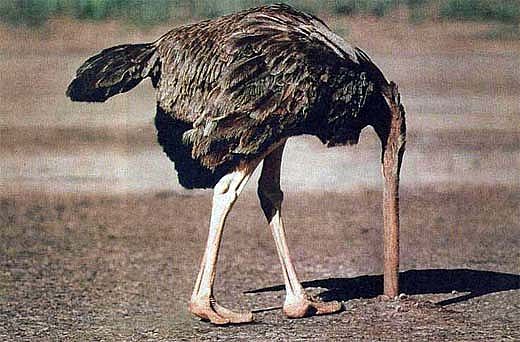
4) Given #2 and #3 above, when proposals regarding the pension go to the Regents in the fall, there may well be push-back and delay. The Academic Senate might resist the kinds of options being put forward. If there is no plan in place by the time the new governor takes office, UC could be swept into general pension “reforms” for the state. Indeed, that could happen even if there is a plan by then. On the other hand, the political deadline of January 2011 could provide a rationale for pushing through UC pension changes that are harmful to UC or that inadequately address the problem.
5) Most faculty are blissfully unaware of points #1-4 above, or have at most a vague perception there is a problem that someone will have to solve. Meetings on campus that have dealt with these issues have been mainly attended by older faculty and retirees, who want assurance they will get their pensions. They are told they will. But younger faculty, who are planning to make a career at UC, are more likely to feel the adverse impact of inadequate solutions. Down the road, and really not so far down the road, the pension problem will have major impacts on funding for other UC activities.
For some examples of the political dynamic surrounding public pensions, here are four items that happen to have appeared in the news just today:
http://www.baycitizen.org/labor/story/jury-volunteer-stirs-pension-fund/
http://www.latimes.com/news/local/la-me-secret-calpers-20100725,0,73608.story
http://www.latimes.com/news/local/la-me-0725-lopezcolumn-20100725,0,2122415.column
http://www.sfgate.com/cgi-bin/article.cgi?f=/c/a/2010/07/24/BUDR1EGLGI.DTL&tsp=1