|

Brown Statement on Higher Ed in California
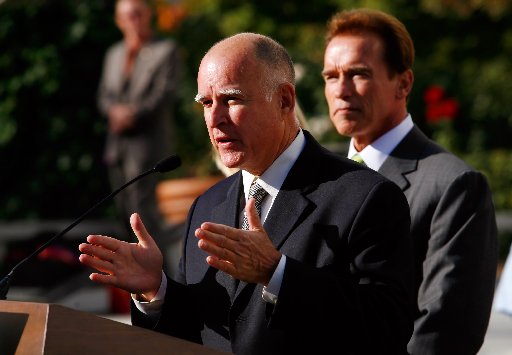

Gubernatorial candidate Jerry Brown released a plan for education. Most of it deals with K-12. However, there is a section on higher ed reproduced below. It picks up on the prisons vs. higher ed theme that the current governor sounded back in January – although there is no promise of an initiative that the governor outlined at that time.

From:
http://www.jerrybrown.org/sites/default/files/Education%20Plan.pdf

Higher Education
The California Master Plan was created in 1960. When I was Governor in the 1970s, the Master Plan was working far better to provide college access and success. In recent years, however, the master plan has been undermined, and it is unclear whether the current financial model for our universities can be sustained.
Recent state budgets have raised tuition drastically, reduced the number of new students–as well transfers from community colleges–to CSUC, cut class sections so that students cannot get basic classes they need, and driven good professors to other states. Students are dropping out because of high costs and the extended time needed to finish. California’s historic public university research base is declining.

This situation calls for a major overhaul of many components of the postsecondary system. We need to convene a representative group to create a new state Master Plan.

We must also reverse the decades long trend of transferring state support from higher education to prisons. We can do this without sacrificing public safety. For example, as Attorney General, I recently blocked a proposed $8 billion prison hospital expansion—which was unnecessarily expensive and which would have added substantially to our state’s deficit. By relentlessly pursuing similar cost savings, we can channel needed funds to our higher education system.

The introduction of online learning and the use of new technologies should be explored to the fullest, as well as ―extended University programs. Technology can increase educational productivity, expand access to higher learning, and reduce costs.

Focus on Community Colleges:
California’s community college system has 72 districts, 110 colleges and more than 2.9 million students and plays a critical role in providing education in a wide range of occupational skills and courses for students intending to transfer to four-year schools.
Given the effective leadership demonstrated in local community colleges, burdensome state regulations and mandates should be kept to a minimum.
Transfer courses should be closely aligned with, and accepted by, the CSUC and UC systems. For example, transfer students are often forced to take redundant courses to graduate from the CSUC system even though they have completed equivalent coursework in community college.

Similar Posts

  • |

    Spotlight on Speech Codes, 2022

    Fire (Foundation for Individual Rights in Education) has just released its yearly summary of the state of free speech at 481 public and private colleges and universities in the United States. FIRE defines free speech as “the overwhelming majority of speech protected by the First Amendment.” Few exceptions exist. The survey addresses a wide variety of issues with relevance to free speech, including: Free Speech Zone PoliciesPrior RestraintsSecurity Fee PoliciesPolicies Governing Speakers, Demonstrations, and RalliesPolicies on Bias and Hate SpeechInternet Usage PoliciesPolicies on Tolerance, Respect, and CivilityBullying PoliciesThreats and IntimidationHarassmentPolicies on Bias and Hate SpeechObscenityIncitement The report is both disappointing…

  • | |

    Faculty Coalition at Work in Sacramento

    As the budget battle grinds on in the state capital, the Council of University of California Faculty Associations (CUCFA) has been advocating on behalf of system faculty. In February, CUCFA weighed in on a proposal to alter UC governance. In a letter to legislators from Joe Kiskis (UC Davis), CUCFA noted While some actions of the Regents and the UC administration generate criticism with which we concur, we do not believe that the UC governance structure itself is fundamentally flawed. The University’s long term goals of access, affordability, and excellence are well served by an independent, diverse Board of Regents…

  • | |

    Jerry Brown Suggests Master Plan is Dated

    Our previous post covered the Jan. 22 meeting of the Regents’ Committee on Educational Policy.  As noted, there was discussion of the 1960 Master Plan for Higher Education, considered a major accomplishment of Brown’s father when he was governor. Below is a link to Brown’s comments in which he suggested the Plan was now dated.  [youtube http://www.youtube.com/watch?v=3RmjI4gVync?feature=player_detailpage]

  • | | | | | | |

    Listen to Part of the Regents Afternoon Session of 1-22-2014

    As we have noted in numerous prior posts, the Regents refuse to archive their meetings beyond one year.  So we dutifully record the sessions in real time.  Below is a link to part of the afternoon session of Jan. 22.  This segment is mainly the Committee on Educational Policy.  Gov. Brown was in attendance.  We will separately (later) provide links just to certain Brown segments.  But for now, we provide a continuous recording. There was discussion of designating certain areas of UC-Merced as nature reserves, followed by discussion of a new telescope.  The discussion then turned to online ed and…

  • |

    Oversize Load?

    From the Sacramento Bee: …(T)the University of California’s academic student workers union recently filed a complaint against the UC Office of the President demanding that discussions about class size be a part of their contract negotiations. The union has been bargaining with UC since last summer, and its contract expired at the end of the year… The UC Student-Workers Union, which represents more than 12,000 teaching assistants, tutors and readers across the UC system, is seeking a regular forum to talk about class size with faculty and UC management, said Josh Brahinsky, a Ph.D. candidate in the history of consciousness…

  • | | | |

    Napolitano Responds to UCLA’s Moreno Report

    Moreno UC President Napolitano issued a response to the (former California Supreme Court Justice Carlos) “Moreno Report” of Oct. 2013, formally titled “Independent Investigative Report on Acts of Bias and Discrimination Involving Faculty at the University of California, Los Angeles.”  It includes directives to all campus chancellors: 1) Every campus should designate an official to serve as its lead discrimination officer. This official is responsible for ensuring that an appropriate response is made to all reports of perceived acts of discrimination, bias, and harassment involving faculty, students, and staff from all parts of the campus. * The discrimination officer will…